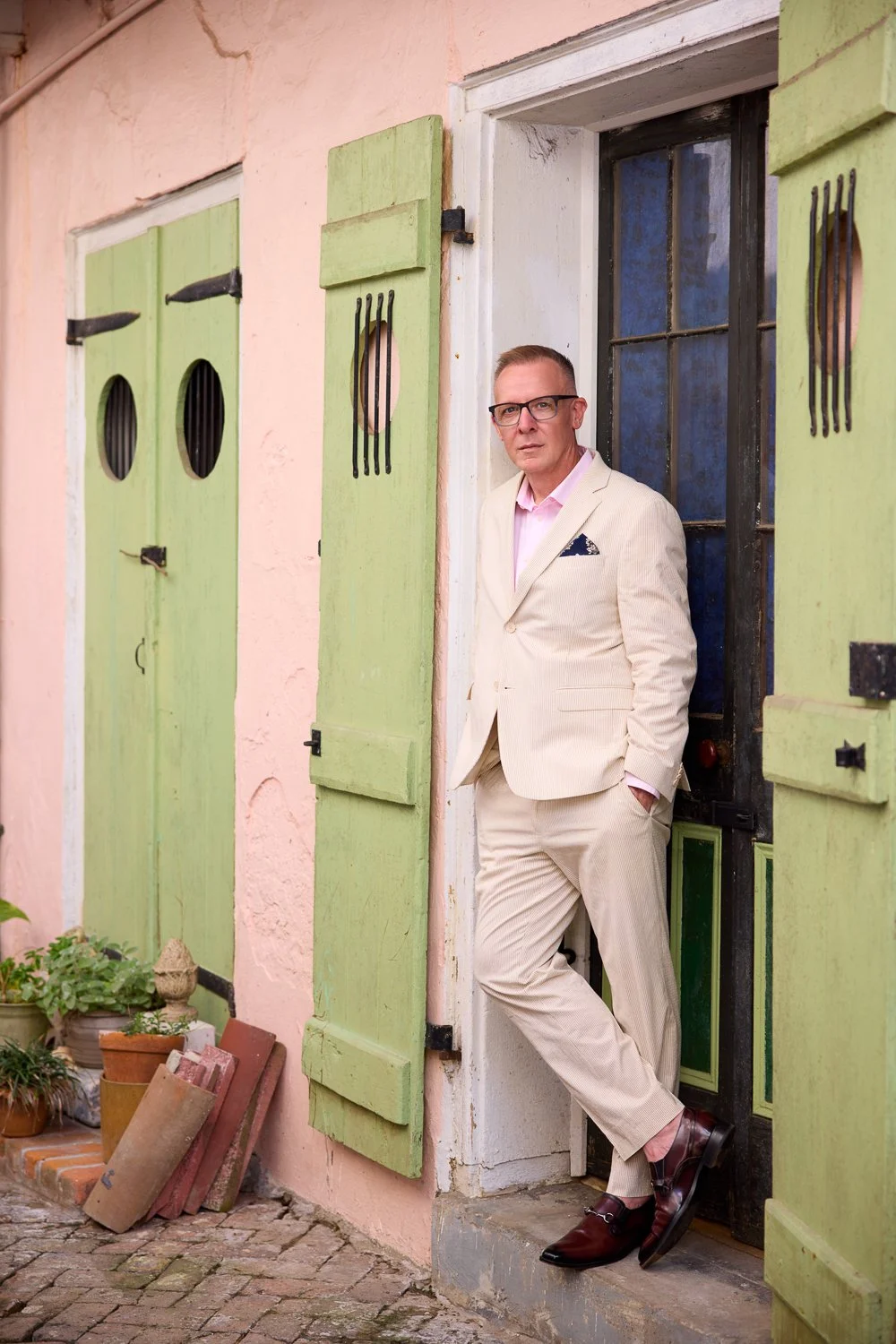
About Douglas Adams
A house is built to hold a chapter of your life. It is rarely built to hold all of them.
I know this because I have lived it. I bought my first home as a single man, not yet knowing what rooms I would need to fill. Later, I bought a home to raise a family in — a house sized for noise, for growth, for people who would one day track mud through the front hall. And later still, I found myself in a different season than the one I had planned for, learning what it means to build a life again in a space that actually fits the person you have become, not the person you used to be.
I share this not because your story will look like mine — it will not. But I understand, in my bones, that the house you are in and the season you are actually living in do not always match. Sometimes there is too much room, and the quiet in it says more than you want it to. Sometimes there is not nearly enough, and you are counting bedrooms against a family that is still growing. Either way, the mismatch is real, and it is nothing to feel foolish about. It is simply what happens when life keeps moving and a house stays still.
Some of the seasons I help clients through are harder than others. I have watched my own grandparents walk the path of losing a spouse after more than fifty years of marriage — sitting inside a house that had become a museum of a whole shared life, and having to decide, piece by piece, what to keep and what to let go. I will not tell you I know how that feels, because I do not — not really, not from the inside, and I do not think anyone who has not lived it can honestly say they do. What I can tell you is that I have seen, up close, what good support looks like in that season, and what it costs a family when that support is not there. I know the difference it makes to have someone beside you who is not in a hurry, who is not there to close a transaction and move on, but who is there to help you get to the other side of it — not painlessly, because it will not be painless, but steadily, and with your dignity intact.
That is the kind of agent I try to be, whether you are buying your first home alone, outgrowing the one you have, or letting go of a house that held fifty years of Christmas mornings.
Before Real Estate
Years ago, before real estate, I worked as a loan officer. I did not think much of it at the time — it was simply part of the job to sit across from someone and help them find a way toward a home they did not think they could afford, or a loan they did not think they would qualify for. I have since learned that some of those moments stayed with people far longer than I ever knew.
My own son, now grown, has told me more than once about men he works with — men who were just young guys back then, building a first house — who still remember, all these years later, that I was the one who saw something in them that no one else did. He was not old enough at the time to understand what any of that meant. He understands it now, and hearing it from his peers has changed the way he sees me.
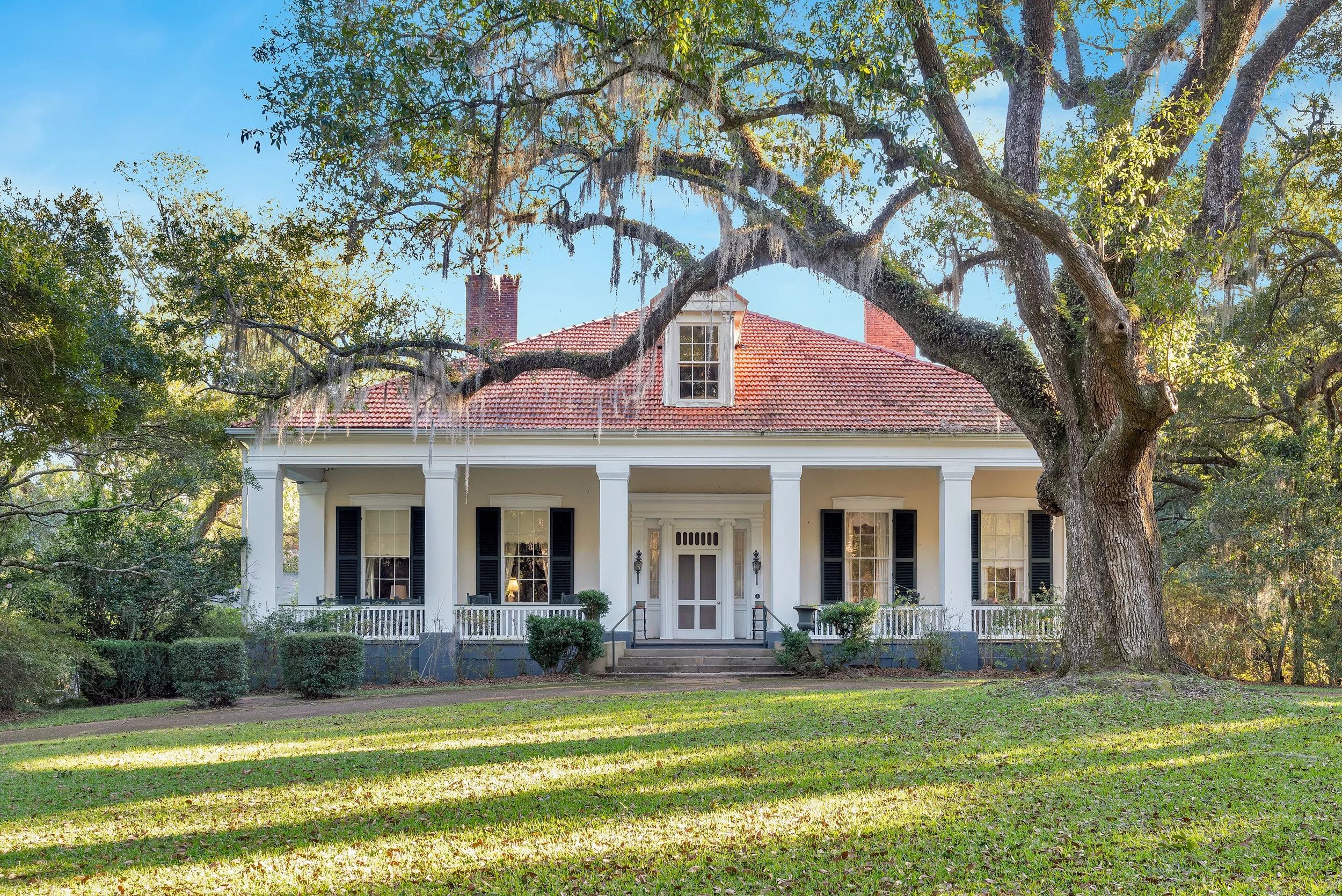
Banking & Leadership
Consumer and commercial lender. Mortgage executive. Compliance officer. President and CEO of a federal credit union.
20+ Years
Banking & Real Estate
Residential, Luxury, Relocation, Historic
2 states
Licensed in Louisiana and Mississippi
Serving Buyers and Sellers
Dual Agent
Frank Lloyd Wright's Fountainhead
Sold to the Mississippi Museum of Art
today
I don't say that to boast. I say it because it's the truest thing I know about how I want to work: not to close a transaction and move on, but to be someone people still remember, years later, as having seen them. That's what I bring to every home I help buy or sell — in New Orleans, along the Mississippi Gulf Coast, and everywhere in between.
More than twenty years of banking and real estate experience across residential, luxury, relocation, and historic homes, including work with architecturally significant homes like Frank Lloyd Wright's Fountainhead — but before any title or accolade, I'm someone who shows up, who pays attention, and who hopes that one day, someone will say: he was good to me.
The builder’s mindset
For most of my life, I thought I was building a career. Looking back now, I realize I was never building a career at all. I was building a man. The career was simply the job site.
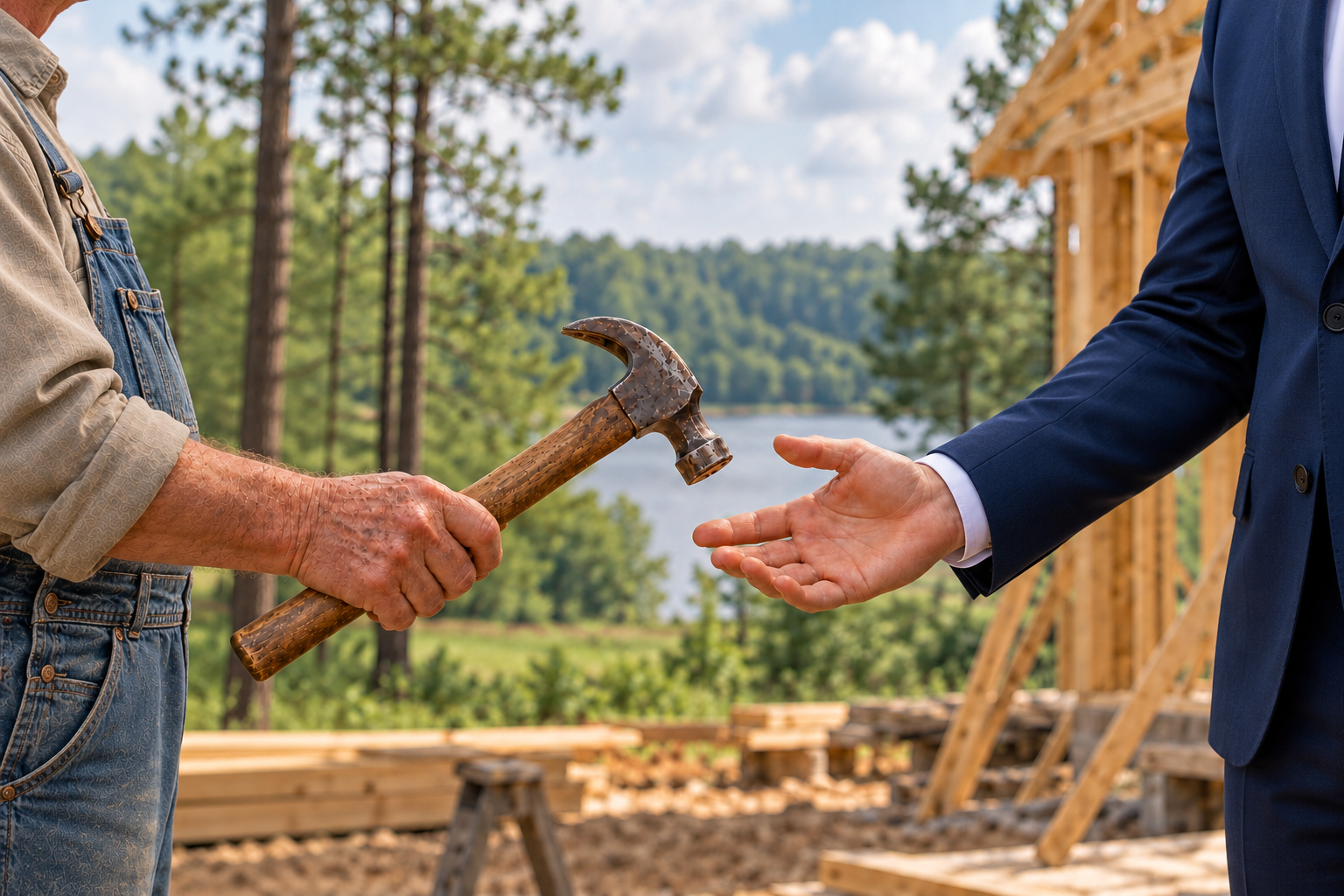
Illustration
“The story is what traveled through those hands.”
There is an image that sits on my desk. Most people see an old hand passing a hammer to a younger hand. I see three generations.
It isn't a photograph of us. I don't have one, and I wish I did. But when I look at it, the hand holding the hammer is my grandfather's, and the younger hand reaching to receive it is mine. At first glance the picture seems obvious. My grandfather built houses. My father built houses. A hammer naturally belongs in their hands.
But the longer I look at it, the more I realize the hammer isn't the story. The story is what traveled through those hands.
That image has become my reminder that the most valuable things we inherit are rarely the things we can hold. They are the lessons that quietly become part of us before we ever realize we're learning them. Integrity. Responsibility. Humility. Craftsmanship. Keeping your word. Finishing what you start. Showing up when people are counting on you.
Those things don't come wrapped in a box. They are handed down one ordinary day at a time.
You could watch him work.
I wasn't raised in a family that talked much about legacy. We lived it.
I grew up in southwest Alabama where people still believed a handshake meant something and where your last name carried far more weight than your résumé. My parents never graduated from high school, but I have met people with multiple graduate degrees who never possessed the wisdom they carried every single day.
My grandfather rarely needed to tell you what mattered. You could watch him work.
My father was much the same. He built houses with his hands, but what he was really building was a reputation. Every board had to be straight. Every corner had to be square. Every customer deserved his best effort whether they noticed the details or not.
That philosophy followed him home. He expected honesty. He expected effort. He expected you to treat people with respect whether they were the owner of the company or the person sweeping the floor.
One afternoon he said something to me that I didn't fully understand until decades later.
"There is no job beneath you."
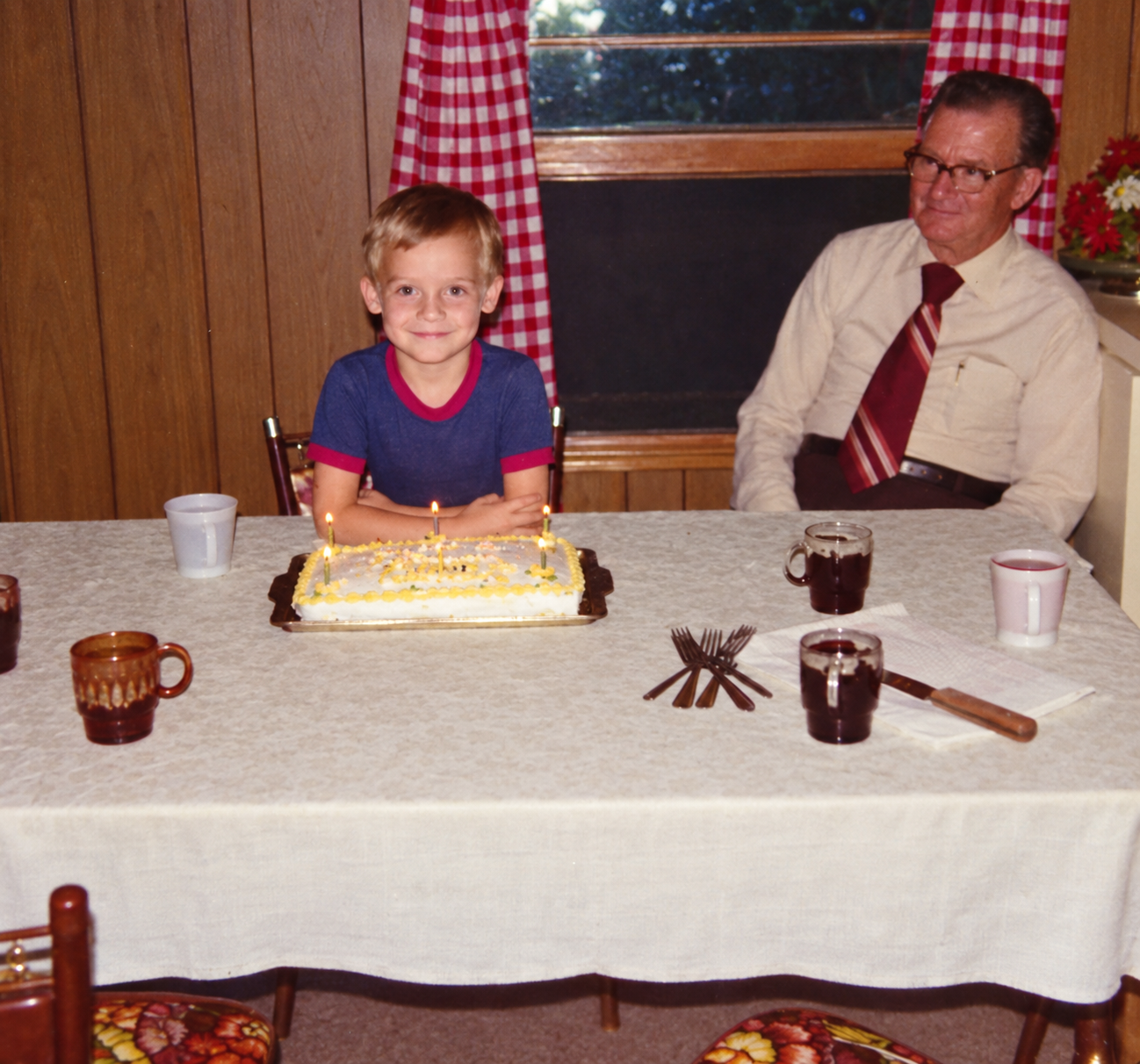
Me at five, with my grandfather, Walter “Petie” Adams, Gilbertown, AL, August 1975
At the time, it sounded like practical advice. It wasn't. It was a philosophy for living. He wasn't talking about jobs. He was talking about pride. He was warning me that the quickest way to lose your character is to become convinced that you're too important to do honest work.
I would carry those six words with me for the rest of my life. Although I didn't know it then, they would become one of the anchors that kept me steady when everything else seemed to be changing.
Like most young people, I believed success had a fairly straightforward path. Work hard. Get promoted. Build a career. Climb the ladder. Reach the top. For a while, life seemed to agree with that plan.
I entered banking and immediately discovered something I loved. It wasn't money. It was people.
Most people assume banking is about numbers. Those numbers matter, of course, but they are never the whole story. Every loan application represented someone's dream. A first home. A family business. A farmer trying to buy another piece of land. An entrepreneur betting everything on an idea. Long before anyone used the phrase "customer success," I was learning that people weren't simply asking for financing.
They were asking someone to believe in them.
I learned to listen before I spoke. I learned that trust is earned in small moments, not dramatic ones. I learned that every signature on a loan document represented years of hope, sacrifice, and hard work.
Without realizing it, I was already becoming the kind of builder my grandfather had been. Only my building materials had changed.
As my career progressed, new opportunities arrived. I became a commercial lender. A mortgage executive. A compliance officer. Eventually, I had the privilege of serving as President and CEO of a federal credit union.
If you had asked me then what I had accomplished, I probably would have listed the titles. Today, I would answer very differently.
The titles were never the accomplishment. The people were.
When you're young, titles feel like trophies. When you're older, you realize they're responsibilities.
Being President and CEO wasn't about having the corner office. It meant employees trusted me to make decisions that affected their livelihoods. Members trusted our institution with the savings they had spent years accumulating. Families depended on us to help them through some of the biggest financial decisions of their lives.
Leadership, I discovered, isn't measured by how many people report to you. It's measured by how many people sleep better because of the decisions you make.
Healthcare, enterprise software, photography, writing, and real estate each became another job site where the tools changed but the work remained the same: building trust, helping people navigate change, preserving stories, and leaving things better than I found them.
Photography taught me to notice what others overlook. Historic homes taught me that buildings are containers for human stories. Writing became another way to preserve those stories before they disappear.
Eventually I looked back over my entire life and finally saw the pattern.
My grandfather built homes. My father built homes. I've spent my life building trust.
The tools changed. The builder never did.
If there's one lesson I hope others carry with them, it's this: every day you walk onto a job site. It may be an office, a hospital, a classroom, a construction site, or your own kitchen table. The location doesn't matter. What matters is what you're building while you're there.
When I look at that image today, I no longer see a hammer changing hands. I see an inheritance.