What BGR's new report found, what a proposed infrastructure fee could mean, and what is still undecided for homeowners, renters, nonprofits, and institutions
THE DOUGLAS ADAMS EDITORIAL SERIES
Market Insight • Property Strategy • New Orleans & Mississippi
Updated November 2026
Quick Answer
In 2025, about $2.74 billion, or 37%, of New Orleans’ assessed real estate value was exempt from property taxes, according to the Bureau of Governmental Research (BGR). That is a share of assessed value, not of parcels, and it spans government property, nonprofit property, the homestead exemption on owner-occupied homes, and certain development incentives. Mayor Helena Moreno has floated a 2027 vote on an infrastructure fee that tax-exempt properties could help pay, but no fee amount, formula, payer list, or ballot language exists yet.
What Did BGR’s New Report Find?
On November 5, 2026, BGR, the nonpartisan Bureau of Governmental Research, published Off the Rolls: Managing the Impacts of Tax-Exempt Property in New Orleans. Its headline finding: in 2025, about $2.74 billion, or 37%, of the city’s real estate assessed value was exempt from property taxes, a share BGR describes as likely among the largest in the country.
The longer view matters. When BGR first studied the question in 1996, 65% of assessed value was off the rolls. The exempt share has fallen by nearly half since then, even as the subject has stayed on the city’s agenda.
The report also found that the Orleans Parish Assessor corrected two errors BGR identified, errors that had inflated exempt value by $721 million. And it reminds readers why the topic carries weight: property taxes supply about half of all local tax dollars in New Orleans.
What Does “37% Tax-Exempt” Actually Mean?
New Orleans prepares for changes in property tax structure.
It means 37% of assessed value, which is different from 37% of properties and different from 37% of market value.
In Louisiana, assessed value is a percentage of a property’s fair market value, and homes are assessed at 10% of market value. So the 37% describes the taxable base the city works with, not the price tags on the houses.
It also does not mean that more than a third of the buildings in the city pay nothing. In a September press release, the office of Orleans Parish Assessor Erroll G. Williams reported that tax-exempt entities own less than 10% of the properties in Orleans Parish but nearly one-third of total property value. A relatively small number of large owners, such as public agencies, universities, and hospital systems, account for much of the exempt value.
Who Owns Tax-Exempt Property in New Orleans?
The largest share is public. BGR found that public property makes up 55% of exempt value. That includes land and buildings owned by government bodies.
The rest falls into several groups that headlines tend to blend together:
Nonprofit property, which under Louisiana law covers property owned by religious, charitable, health, welfare, fraternal, and educational nonprofits, among others.
The homestead exemption, which removes the first $75,000 of a home’s value from taxation for owner-occupants.
Development incentives, which reduce or delay taxes on certain projects for a set period.
This is why “tax-exempt” and “nonprofit” are not interchangeable. A homeowner claiming the homestead exemption, a city fire station, a university, and a church all contribute to the 37%, for very different reasons.
What Is the $316 Million Figure, and Is the City Losing It?
No. It is an illustration, not a bill that went unpaid.
BGR estimated that if every exempt property were taxed at 2025 rates, local governments would collect about $316 million more per year. Put another way, if the same total revenue were spread across all property, the millage rate could have been about 32% lower. BGR labels both numbers preliminary estimates meant to show the scale of the impact, and states plainly that the report is not a call to tax all exempt property.
In practice, much of that value could never be taxed. Government property and the homestead exemption are written into law, and changing nonprofit exemptions would require action beyond City Hall. The figure shows who carries the property tax load today, not money waiting to be collected.
What Is the Difference Between a Property Tax and an Infrastructure Fee?
A property tax is levied on assessed value, and exempt properties do not pay it. A fee is a charge tied to a service or a cost a property creates, and it can be designed to apply to properties that are exempt from taxes.
That distinction is the heart of the current conversation. Many U.S. cities charge stormwater fees, often based on how much paved or roofed surface a property has, because hard surfaces send rainwater into the drainage system. BGR’s top recommendation is that city leaders develop an infrastructure fee proposal by 2027 that could apply to all property owners, including exempt ones.
Why Does Drainage Put a Deadline on This?
Because part of the city’s drainage funding has an expiration date. According to BGR, one drainage property tax expires in 2027 unless voters renew it, and another expires in 2031. If both lapse, 60% of the drainage system’s existing revenue would be at risk.
That timing is why a fee discussion and a drainage discussion are happening together. Any fee proposal, and any drainage tax renewal, would be on the minds of voters at roughly the same moment.
What Has Mayor Moreno Proposed?
In a social media post on November 8, 2026, Mayor Helena Moreno floated a 2027 vote on an infrastructure fee that could require nonprofits and other tax-exempt properties to contribute, with the money going toward stormwater management and infrastructure. FOX 8 reported the proposal the next day.
What has not been proposed matters just as much. As of this writing, there is no fee amount, no formula for calculating it, no final list of who would pay, and no ballot language. FOX 8 reported that the fee’s structure is unclear.
Early reactions show the range of views. LCMC Health, a nonprofit health system, pointed to the $129 million a year it provides in charity care and uncompensated services and the 15,697 people it employs across the region. Cheryl Austin, executive director of the Greater Treme Consortium, a flood-prevention group, said that if a fee would reduce flooding, all properties should pay into the system, and she asked for a study of what is needed and where the money would go.
Is the Infrastructure Fee the Same as This Year’s Property Tax Increase?
No. They are two separate actions.
This fall, the City Council considered a roll forward, which means charging more of the property tax rates, or millages, that voters have already approved but previous councils chose not to levy in full. The Moreno administration asked for the increase to help avoid cuts to city services, and on November 6, 2026, Axios New Orleans reported that the council unanimously approved a property tax increase. Before the vote, the administration estimated that the average homeowner could pay about $200 more a year if every millage was rolled forward.
The infrastructure fee is a different idea. It would be a new charge, still undefined, that could reach properties the property tax does not.
Could a Fee Affect Homeowners, Renters, Nonprofits, or Institutions?
It could, but how much depends entirely on a design that does not exist yet.
Homeowners: If a fee applies to all property, homeowners could pay it alongside their property tax bill. If it is designed to fall mainly on exempt property, homeowners could see little direct cost. Either way, the outcome of the 2027 drainage renewal will shape what owners pay.
Renters: Renters do not pay property taxes or fees directly. Whether any new charge on owners reaches rent would depend on the fee’s size and on individual landlords. Nothing decided so far points one way or the other.
Nonprofits: Churches, charities, and community groups that own property would be the most directly affected by a fee aimed at exempt owners. How a fee treats small nonprofits versus large ones is one of the open design questions.
Institutions: Universities and hospital systems hold large amounts of exempt value. They are likely to be part of any negotiation, and, as LCMC’s response shows, they will point to the services they already provide. Individual exemptions are also getting closer review: Assessor Erroll G. Williams has challenged the exemption for the Higgins Hotel, which is owned by an entity related to the National WWII Museum.
What Should New Orleans Homeowners and Buyers Do Now?
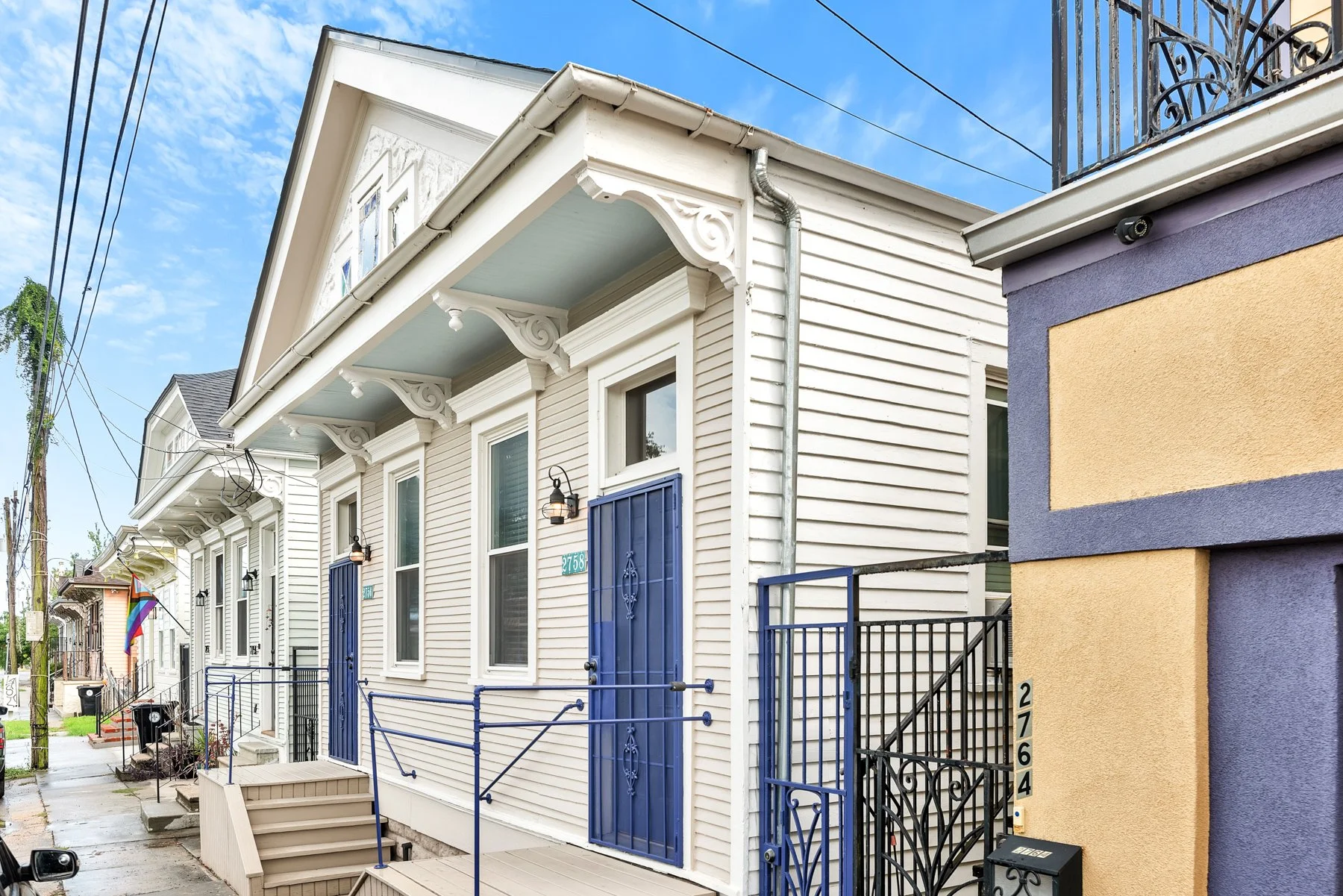
New Orleans Double-shotgun style home
Start with what you can control. If you own and live in your home, confirm that your homestead exemption is in place with the Orleans Parish Assessor’s Office, at (504) 754-8811 or info@orleansassessors.com. It applies to the first $75,000 of your home’s value.
Check your own numbers. The City’s Roll Forward Millages Impact Calculator estimates how the higher rates affect a specific home, and next year’s bills will reflect the council’s vote, separate from any fee proposal. The drainage renewal and any fee measure would come to voters later.
If you are buying, ask for the current tax bill and remember that a seller’s bill may not reflect your own. A new owner may not carry the same exemptions, and the coming votes could change the numbers again.
This article is general information, not tax or legal advice. For questions about your own bill, talk with the Assessor’s Office or a tax professional.
My Perspective
Before I became a real estate advisor, I spent years in traditional and mortgage banking, where property taxes are not a policy debate. They are a line in a monthly payment. When a tax bill rises, the escrow rises with it, and that is how most homeowners feel these decisions.
In 15 years of helping clients buy and sell in New Orleans, I have found that the questions that matter most are practical ones: what will I owe, when, and why. That is the spirit of this article. I am not taking a side on whether exempt property should pay a fee. I want my clients to understand what the 37% means, what is actually on the table, and what is still undecided, so they can read the headlines clearly and vote with the facts in hand.
Frequently Asked Questions
Is 37% of New Orleans property tax-exempt?
About 37% of the city’s real estate assessed value, roughly $2.74 billion in 2025, was exempt, according to BGR. That is a share of assessed value, not of the number of properties.
Is all tax-exempt property in New Orleans owned by nonprofits?
No. BGR found that public property makes up 55% of exempt value. Exempt value also includes nonprofit property, the homestead exemption on owner-occupied homes, and certain development incentives.
Is New Orleans losing $316 million a year?
No. BGR’s $316 million figure estimates what local governments would collect if all exempt property were taxed at 2025 rates. BGR calls it a preliminary illustration and says the report is not a call to tax all exempt property.
What is the proposed New Orleans infrastructure fee?
Mayor Helena Moreno has floated a 2027 vote on an infrastructure fee that tax-exempt properties could help pay, with revenue for stormwater management and infrastructure. No amount, formula, payer list, or ballot language has been released.
Is the infrastructure fee the same as the 2026 property tax increase?
No. The City Council’s November 2026 vote raised property tax rates within limits voters had already approved, a process called a roll forward. The infrastructure fee is a separate, still-undefined proposal.
Would homeowners pay the infrastructure fee?
That is undecided. BGR recommended a fee that could apply to all property owners, including exempt ones, but no proposal has defined who would pay or how much.
Why is drainage part of this discussion?
One drainage property tax expires in 2027 unless voters renew it, and another expires in 2031. BGR says that if both lapse, 60% of the drainage system’s existing revenue would be at risk.
The Bottom Line
The 37% figure is real, but it is easy to misread. It measures assessed value, the largest share belongs to public property, and the $316 million estimate is an illustration rather than lost revenue. The proposed infrastructure fee is an idea headed toward a possible 2027 vote, not a policy with numbers attached, and it is separate from the property tax increase the council has already approved. For owners, buyers, and renters, the practical steps today are to confirm your homestead exemption, check the City’s calculator for your own home, and follow the drainage and fee measures as details are released.
If you are weighing a purchase or sale and want to understand what you will actually pay to own a New Orleans home, call me at 504-444-8670 and we will walk through the numbers together.
Douglas Adams
Douglas Adams Real Estate with Crescent Sotheby’s International Realty
617 Julia St, New Orleans, LA 70130 | 504-444-8670
Each Office Is Independently Owned and Operated
About the Author

Douglas Adams, Global Real Estate Advisor, New Orleans and Mississippi Gulf Coast
Douglas Adams is a Global Real Estate Advisor with Crescent Sotheby’s International Realty serving Louisiana and the Mississippi Gulf Coast.
Through The Douglas Adams Editorial Series, he explores the history, architecture, neighborhoods, and communities that make the Gulf South such a remarkable place to call home. Every article is informed by firsthand experience, original photography, professional research, and a passion for telling the stories that exist beyond the front door.